

Theology as a scientific discipline took shape between the 11th and 13th centuries, when, in parallel with the emergence of universities in Western Europe, its study gradually moved from monasteries and cathedrals to university settings. Although the Enlightenment in the 18th century called into question its university status, theology has survived as an academic discipline to this day, except where it has been eliminated due to the dominance of secularism or anti-religious ideologies.
As an integral part of the Church’s teaching mission, theological faculties serve a dual role: preparing candidates for priestly ministry and scientifically deepening theological knowledge for a more complete understanding of Revelation. By their very nature, they are called to cooperate with the Church’s Magisterium. Consequently, the Apostolic See, specifically the Dicastery for Culture and Education, reserves the exclusive right to canonically establish such faculties. This office of the Roman Curia approves statutes and programs, exercises supreme oversight, appoints deans, and grants permission to faculty members for promotion to higher academic ranks (cf. FRANCIS, Ap. Const. Praedicate Evangelium, art. 161).
The presence of a theological faculty at a university fosters dialogue on the relationship between faith and reason and contributes to the integration of knowledge. The Church, therefore, encourages cooperation with other scientific and cultural centers for the common good, because theology, as Pope John Paul II emphasizes, “plays a particularly important role in the search for the synthesis of knowledge” and helps other disciplines “to provide a perspective and orientation not contained in their methodology” (JOHN PAUL II, Ap. Const. Ex corde Ecclesiae, no. 19).
Faith and science do not oppose each other because, while respecting the autonomy of science, “profane and religious realities have their source in the same God” (GS, no. 36), who is the originator of both creation and revelation. Beyond the theological faculty serving not only as one of the university’s faculties but also enriching other faculties and forming an integral part of research and dialogue, it is important to recognize that the university itself is a space where the theological faculty is enriched.

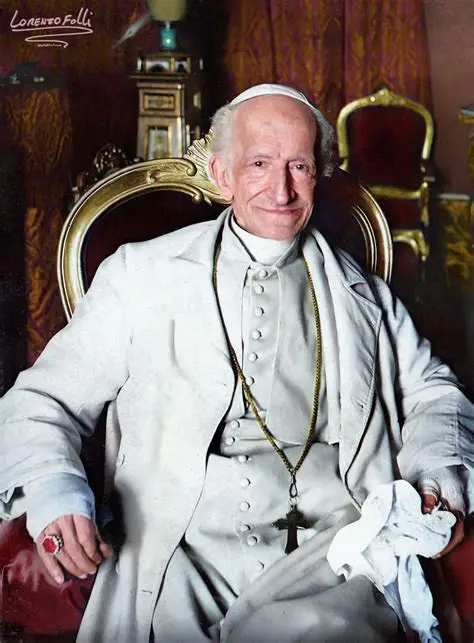
The history of organized philosophical-theological studies in Bosnia and Herzegovina dates back to the Middle Ages, when the leading educators were religious orders, especially the Franciscans. Their activity was interrupted by Ottoman rule, during which priestly candidates were mainly educated abroad. Administration over Catholics was then exercised by the Apostolic Vicariate, established in 1735 A key turning point occurred after the establishment of Austro-Hungarian rule in 1878 Pope Leo XIII with the apostolic letter Ex hac augusta of July 5, 1881, re-established the regular church hierarchy and founded the Ecclesiastical Province of Vrhbosna.
This decision laid the groundwork for systematic higher education. The Ecclesiastical Province of Vrhbosna encompassed the Archdiocese, headquartered in Sarajevo, along with the Dioceses of Banja Luka and Mostar-Duvno, to which Trebinje-Mrkan was later joined. The first Archbishop of Vrhbosna, Dr. Josip Stadler, founded the Vrhbosna Catholic Seminary in 1890, which became the central institution for priestly formation. Concurrently, the Franciscans established their theological institutions in Mostar (1895) and Sarajevo (1909). This established the foundation for the modern theological faculties that continue to operate in Bosnia and Herzegovina today.
After Pope Leo XIII 1881. established the regular ecclesiastical hierarchy in Bosnia and Herzegovina, the first Archbishop of Vrhbosna, Dr. Josip Stadler, entrusted the education of the clergy to the Jesuits. In 1882, they began working with the first generation of high school students in Travnik. When the first priestly candidates completed high school in 1890, philosophical-theological studies were initiated there, while simultaneously, the construction of the Theological Seminary began in Sarajevo. Thus, the year 1890 is recorded as the first year of philosophical-theological studies in this institution, and consequently, the first organized higher education in Bosnia and Herzegovina. Therefore, this institution rightfully boasts the title of the oldest higher education institution in Bosnia and Herzegovina. Work in the new building of the Theological Seminary in Sarajevo commenced on September 1, 1893. While the Vrhbosna Theological Seminary retained its name throughout its history, its higher education institution underwent changes and was renamed several times.
After World War II and the establishment of the communist regime, the Seminary’s operations were prohibited, and its building was partially nationalized in 1944. This situation persisted until November 25, 1969, when the first theological study course commenced in the non-nationalized faculty section of the building, and on October 2, 1972, the western part of the building was also opened.


During the challenging post-war period, when the Seminary’s operations were forcibly suspended and part of its building nationalized, a crucial step towards its restoration was undertaken by Archbishop of Vrhbosna Smiljan Čekada. Through his persistent negotiations with the then-republican authorities in Bosnia and Herzegovina, he successfully repurchased the confiscated portion of the building, thereby creating the necessary conditions for its continued activity. This effort culminated in the joint endeavors of Archbishop Čekada, the Bishop of Mostar-Duvno Dr. Petar Čule, and the Bishop of Banja Luka Alfred Pichler, leading to the solemn reopening of the Seminary on November 25, 1969, which marked a new chapter in the life of the Church in Bosnia and Herzegovina.
The subsequent two decades were characterized by further development, with a new significant phase commencing in 1989. A reorganization was implemented, establishing the Vrhbosna Catholic Seminary, which clearly separated two fundamental components: the Vrhbosna Theological Seminary as the central formation institute and the Vrhbosna Higher Theological School as an educational institution. The academic standing of the school was further affirmed in 1990 when it became affiliated with the Catholic Faculty of Theology of the University of Zagreb. However, peaceful operations were once again interrupted at the onset of the Homeland War. Despite challenging circumstances, the continuity of education and formation was maintained through a temporary relocation to Bol on Brač, where professors and seminarians operated in exile from 1992 to 1996.
Upon returning to Sarajevo in 1996, the Seminary’s administration was separated from the Higher Theological School, which was renamed: Vrhbosna Catholic Theology. From that year, studies were also opened to lay faithful. The legal foundation for full integration into the academic system was established by the signing of the Fundamental Agreement between Bosnia and Herzegovina and the Holy See (cf. art. 14) in 2006, and by the Law on Freedom of Religion and the Legal Status of Churches and Religious Communities in BiH (arts. 7 and 10) from 2004. These documents guaranteed religious educational institutions the same rights as state institutions, including the recognition of diplomas.
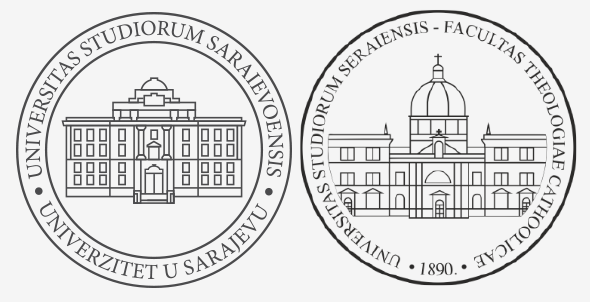
During the tenure of Archbishop Vinko Cardinal Puljić, in 2009, the Congregation for Catholic Education, by decree (Prot. no. 714/2004, September 21, 2009), elevated Vrhbosna Catholic Theology to the rank of a Catholic Faculty of Theology. Since 2013, the Catholic Faculty of Theology has been a full member of the University of Sarajevo.
